

Do you actually understand
your numbers?
Most people diagnosed with hypertension can't explain what either number means. That's where we start.
Whether you're holding your first prescription, Googling a parent's reading at midnight, or you've been on amlodipine for years — these are the answers your cardiologist meant to give you.
“What do the two numbers actually mean?”
Your blood pressure reading has two numbers separated by a slash. The top number — systolic — is the pressure inside your arteries when your heart beats. The bottom number — diastolic — is the pressure between beats, when your heart is resting.
Think of it like water pressure in a garden hose. Systolic is the pressure when you squeeze the handle. Diastolic is the pressure when you let go but the hose is still connected.
Neither number alone tells the full story. A reading of 142/88 means your heart is pushing at 142 when it contracts, and the residual pressure never drops below 88 at rest.
Blood Pressure Categories
Both numbers matter — elevated diastolic is just as important to address as elevated systolic.
“Is 140/90 really that bad if I feel completely fine?”
Hypertension is called the "silent killer" because it produces almost no symptoms until something serious happens — a heart attack, a stroke, kidney damage. Feeling fine is not evidence that your arteries are fine.
At 140/90, your arteries are under sustained pressure roughly equivalent to a garden hose with the valve partially closed. Over years, this damages the inner lining of blood vessels, accelerates plaque buildup, and quietly strains your heart.
The dangerous moment — a stroke, a heart attack — often arrives as the first symptom. The good news is that 140/90 is highly treatable. The better news is that you caught it.
Feeling fine is not a measurement. Your cuff is the only instrument that tells the truth.
“My reading is always higher at the doctor's office. Is that real?”
"White coat hypertension" is real and well-documented. For some people, the anxiety of a clinical setting genuinely raises blood pressure by 10–20 points — enough to push a normal reading into Stage 1 territory.
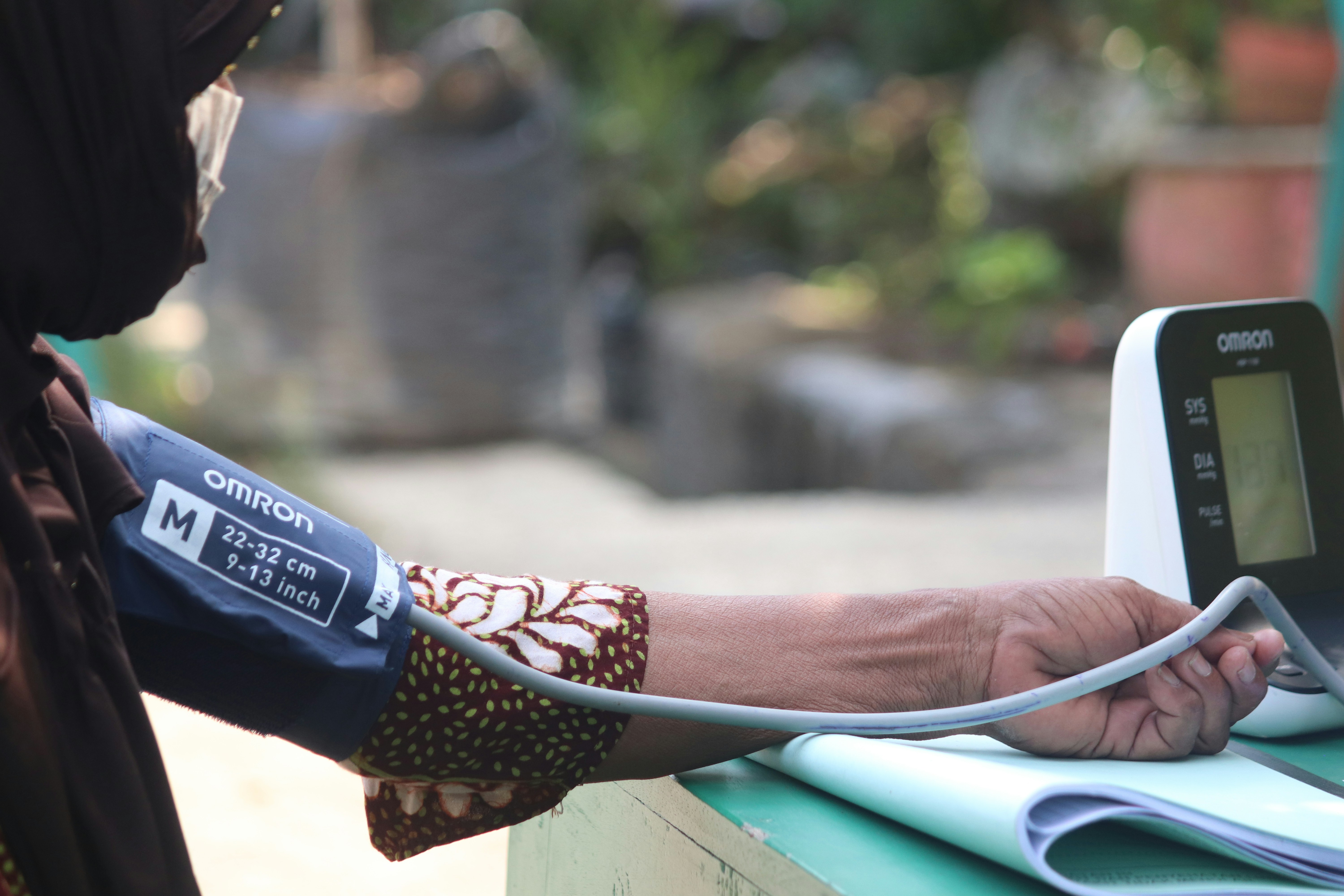
This is why home monitoring matters. A consistent log of morning readings (before coffee, before medication, after five minutes of sitting quietly) gives your doctor far more useful information than a single office reading.
That said, white coat hypertension still carries some cardiovascular risk compared to truly normal blood pressure. It's not a get-out-of-jail-free card — it's a reason to monitor more carefully.
Take two readings, two minutes apart, every morning for two weeks. That data is worth more than any single office visit.
“How much does what I eat and how I sleep actually move the needle?”
Sodium is the clearest dietary lever. The average American consumes about 3,400mg of sodium daily. Cutting to under 2,300mg — roughly one teaspoon of salt — can reduce systolic pressure by 5–6 points on its own. For salt-sensitive individuals, the effect can be 8–10 points.
Sleep is underrated. Sleeping less than 6 hours per night is independently associated with a 20% higher risk of hypertension. Poor sleep elevates cortisol and activates the sympathetic nervous system overnight — keeping your blood pressure elevated during the hours it should be recovering.
Chronic stress doesn't permanently raise blood pressure on its own, but it triggers repeated spikes and leads to the behaviors — poor sleep, alcohol, sedentary days — that do.
Sodium reduction and 7–8 hours of sleep are the two lifestyle changes with the clearest, most measurable blood pressure impact.
“Why can't I have grapefruit on my medication?”
Grapefruit contains compounds called furanocoumarins that block an enzyme in your intestine called CYP3A4. This enzyme normally breaks down many medications before they enter your bloodstream. When you eat grapefruit, more of the drug gets absorbed — sometimes two to five times more.
For calcium channel blockers like amlodipine, felodipine, and nifedipine, this means a much stronger dose effect than intended: more dizziness, more ankle swelling, and potentially dangerously low blood pressure.
The effect can last up to 24 hours after eating grapefruit. It's not about timing — it's about avoiding it entirely while on these medications. Oranges, lemons, and limes are fine.
If you're on a calcium channel blocker, grapefruit and grapefruit juice are off the table — not just around dose time, but entirely.
“Can I stop taking my medication if my numbers go down?”
This is the most common and most dangerous mistake in hypertension management. When your numbers go down on medication, it means the medication is working — not that the underlying problem is resolved.
Blood pressure medications don't cure hypertension. They manage it, the same way glasses correct vision without changing the eye. Stopping medication typically returns blood pressure to its previous level within days to weeks.
The exception is when significant lifestyle changes — meaningful weight loss, reduced sodium, sustained exercise — have genuinely lowered your baseline. In that case, your doctor may trial a dose reduction. Never stop without that conversation.
Your numbers going down on medication is evidence it's working — not evidence you no longer need it.
“What's the difference between all these medications my doctor mentioned?”
ACE inhibitors (lisinopril, ramipril) block a hormone pathway that constricts blood vessels, allowing them to relax. They're often first-line and protect the kidneys — which is why they're especially common in patients with diabetes.
ARBs (losartan, valsartan) work on the same pathway one step downstream. They're often prescribed when ACE inhibitors cause a dry cough — a side effect in about 10–15% of patients.
Calcium channel blockers (amlodipine) relax the muscle cells in artery walls. Beta-blockers (metoprolol, atenolol) slow heart rate and reduce the force of contractions. Diuretics (hydrochlorothiazide) reduce blood volume by increasing urination.
Many patients end up on two or three of these at different doses. That's not a failure — it's how hypertension works. Different mechanisms work synergistically.
A dry cough on lisinopril is not an allergy — ask about switching to an ARB rather than stopping blood pressure treatment.
Why This Matters
Hypertension is common.
Understanding it is rare.
116M
American adults with high blood pressure
Nearly half of all adults
24%
Have it under control
Of those diagnosed
7 min
Average primary care visit
Not enough time for real answers
5pts
Systolic reduction from sodium cut alone
Under 2,300mg daily
Sources: American Heart Association 2024, CDC National Health Statistics
How much do you actually know about your blood pressure?
Eight questions. Three minutes. You'll get a personalized knowledge score and a reading plan built around the gaps — not the things you already know.
Your diagnosis status
Current medications
Family history
No email required to take the quiz
My BP Log
February 2026
30-day log with medication column, notes, and trend chart
Download Your Numbers Tracker
A printable 30-day blood pressure log designed for real home monitoring — with columns for systolic, diastolic, pulse, medication taken, and a notes field for what mattered that morning.
- ✓Morning and evening reading columns
- ✓Medication taken checkbox
- ✓Weekly average calculator row
- ✓Bring-to-appointment summary page
One email, one PDF. No newsletter unless you ask for it.